The Space Between Art and Product | Contemporary Marquetry
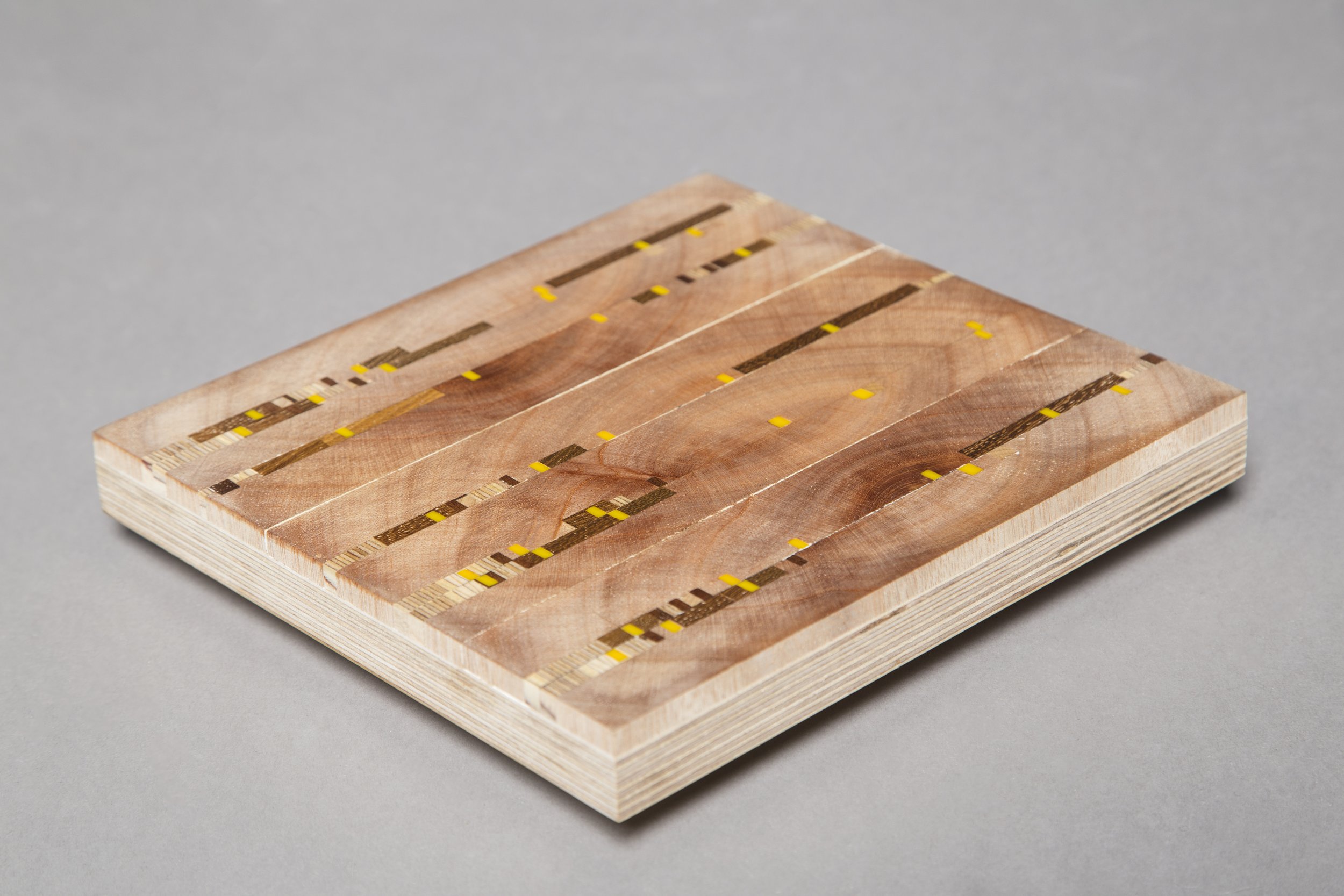
One of the most difficult questions we have had to answer as a studio is deceptively simple:
What exactly are we making?
At first glance, the answer seems obvious. We make patterned surfaces, furniture, artworks and interiors using reclaimed and recycled materials.
But in practice, the reality is much more complicated than that.
Some pieces exist entirely as artworks — singular, expressive, impossible to repeat exactly. Others are products designed for consistency, scalability and commercial application. Many sit somewhere between those two positions, borrowing qualities from both but fitting neatly into neither.
That tension — between art and product, expression and repeatability, experimentation and manufacture — sits at the centre of Stratum Marquetry.
And learning how to navigate it has fundamentally shaped the business.
The Problem With Categories
When we first started, we positioned ourselves as bespoke furniture makers and interior specialists.
That made sense at the time. Furniture was the most obvious output of the process. Tables, surfaces and architectural pieces gave the work a functional context that people could immediately understand.
But gradually, it became clear that the object itself was not the primary point of interest.
People were responding to the patterns.
The patterned material language embedded within the surfaces became the true artefact. The furniture was almost secondary — a structure carrying something more distinctive within it.
That realization created ripples that flowed through how we felt we should and would be viewed.
Because once pattern becomes the central focus, the work no longer fits comfortably into a single category. Is it furniture design? Surface design? Material innovation? Sculpture? Craft? Manufacturing? Art?
The answer is probably all of them.
And that creates both opportunity and difficulty.
Art Allows Complexity
Artwork gives us permission to become more excessive.
More materials.
More machining.
More layers.
More experimentation.
More unpredictability.
The Future Icons pieces are a good example of this. Those works brought together an enormous variety of reclaimed materials into dense, layered marquetry blocks that could never realistically function as repeatable commercial products.
The process itself became expansive.
Wider staves. Thicker composite blocks. More cuts. More rotations. More interventions. More opportunities for accidents and discovery. In some cases, the surfaces moved closer to collage or sculpture than conventional design objects.
Importantly, artworks also allow time to behave differently.
A product exists inside a financial structure. It has to justify its production cost. It needs repeatability, consistency and efficiency. Artwork operates under a different logic. Complexity itself can become part of the value.
That freedom changes the emotional relationship to the making.
The process becomes less about optimisation and more about exploration.
Sometimes the resulting pieces are impossible to reproduce exactly again — and that uniqueness is precisely the point.
Products Demand Discipline
Products are much less forgiving.
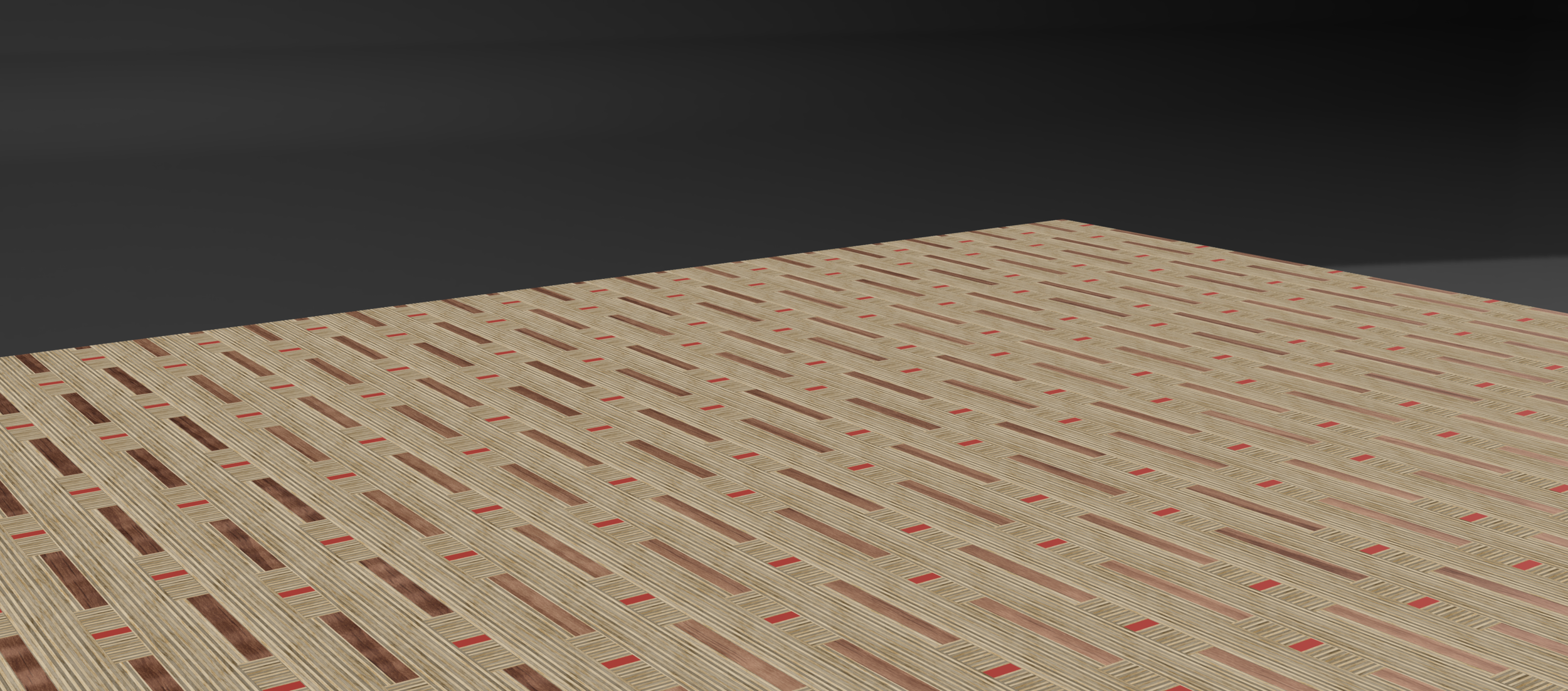
If you want to sell a repeatable surface, flooring system or wall panel, then you cannot rely entirely on improvisation. The process needs structure. Materials need consistency. Costs need predictability. Timelines need to be manageable.
At some point, artistry alone is not enough.
This became especially clear as the studio evolved. Early work often involved extensive correction and adaptation — solving errors as they emerged, adjusting by instinct and allowing imperfections to become part of the final outcome.
That approach worked creatively, but commercially it became difficult.
If a customer orders a specific pattern, they expect to receive that pattern — not something vaguely adjacent to it. Products require reliability. They need recipes, systems and frameworks that allow the work to be repeated without reinventing the process every time.
That has forced us to rethink production itself.
Processes that once depended entirely on intuition now need to be simplified, documented and refined. Not stripped of creativity, but structured enough that they can eventually be carried out by a wider team rather than existing solely inside our heads.
In many ways, the studio has gradually shifted from pure experimentation toward considered process design.
That does not mean the work has become less creative.
It simply means creativity increasingly exists inside the system itself.
The Emotional Difference
One of the most important distinctions between artwork and product is emotional ownership.
When creating artworks, the conceptual and emotional content often sits directly with the maker. The decisions are personal. The process can become reflective, instinctive and highly subjective.
But commercial projects operate differently.
When working with architects, interior designers or bespoke clients, the role shifts. The work becomes collaborative. The surface needs to satisfy another person’s vision, requirements and constraints.
That means learning to let go.
The pattern is no longer purely about what we want to see. It becomes about helping another person realise something meaningful within their own environment or project.
That shift requires a different mindset entirely.
You stop asking, “What do we want to make?”
And start asking, “What does this project need?”
Understanding that distinction has been critical.
Without it, artistic ego can quickly interfere with practical collaboration.
Digital Futures
Interestingly, artwork also creates opportunities beyond the physical object itself.
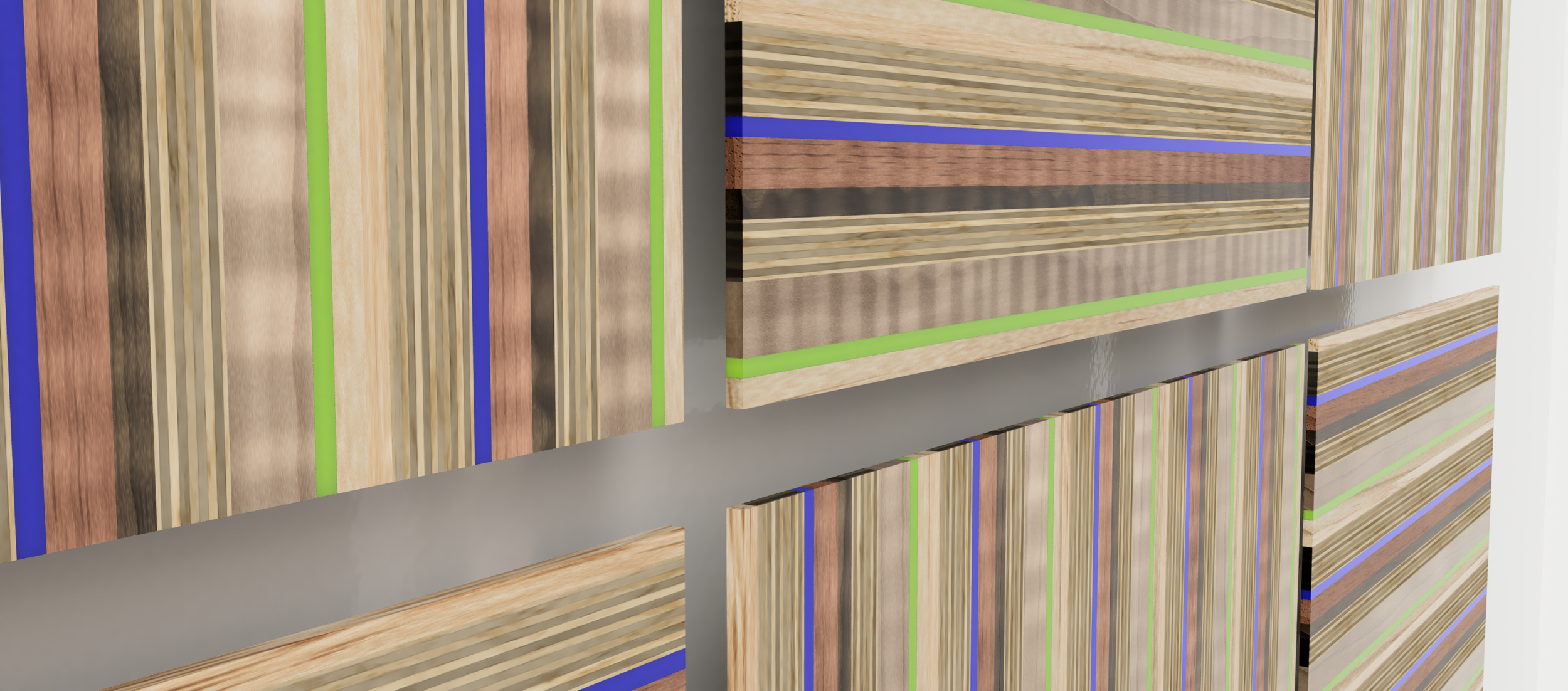
A singular artwork may never become a repeatable material surface in physical form — but it can still generate entirely new outputs through digitisation.
Once photographed or scanned, highly complex surfaces can become repeatable digital patterns, prints or visual assets. A one-off physical piece can evolve into something reproducible in entirely different formats.
That possibility opens another layer of conversation around value.
The original object remains singular and materially unique. But its visual language can continue elsewhere — in print, textiles, digital applications or collaborations.
In that sense, artworks can act almost like research and development for future product directions.
The boundaries remain fluid.
Living Between The Two
The truth is that Stratum Marquetry exists permanently between artistic experimentation and commercial manufacture.
Too artistic, and the work becomes impossible to scale.
Too commercial, and it risks losing the unpredictability that makes it exciting in the first place.
The challenge is maintaining both simultaneously.
To preserve enough experimentation that the work continues evolving creatively, while building enough structure that the studio can survive economically.
That balancing act influences every decision we make — from material selection and pricing through to machining processes, collaborations and future ambitions.
Ultimately, we do not see art and product as opposing forces.
We see them as interconnected systems.
The artworks push the language forward.
The products stabilize it.
The experimentation generates possibility.
The manufacturing creates continuity.
And somewhere in the space between those things, Modern Marquetry continues to emerge.